Showing posts with label BMW. Show all posts

BMW 3.0CSL

The BMW 3.0CSL was a homologation appropriate congenital to accomplish the car acceptable for antagonism in the European Touring Car Championship. The "L" in the appellation meant "leicht" (light), clashing in added BMW designations, area it meant "lang" (long). The animation was accomplished by application thinner animate to anatomy the assemblage body, deleting the trim and soundproofing, application aluminium admixture doors, bonnets, and cossack lids, and application Perspex ancillary windows. The bristles hundred 3.0CSLs exported to the United Kingdom were not absolutely as ablaze as the others, as the importer had insisted on application the soundproofing, electric windows, and banal E9 bumpers on these cars.

Initially application the aforementioned agent as the 3.0CS, the 3.0CSL was accustomed a actual baby access in displacement to 3,003 cc (183.3 cu in) by accretion the agent bore by one division of a millimetre. This was done in August 1972 to acquiesce the CSL to be raced in the "over three litre" antagonism category, acceptance for some access in displacement in the antagonism cars. In 1973, the agent in the 3.0CSL was accustomed another, added subtantial access in displacement to 3,153 cc (192.4 cu in) by accretion the achievement to 84 mm (3.3 in). This final adaptation of the 3.0CSL was homologated in July 1973 forth with an aerodynamic amalgamation including a ample air dam, abbreviate fins active forth the advanced fenders, a addle-brain aloft and abaft the abaft bend of the roof, and a alpine rear wing.[10] The rear wings were not installed at the factory, but were larboard in the cossack for accession afterwards purchase. This was done because the wings were actionable for use on German roads. The abounding aero amalgamation becoming the antagonism CSLs the appellation "Batmobile".

BMW 507

The BMW 507 is a sports car roadster produced by BMW from 1956 to 1959. Initially intended to be exported to the United States at a rate of thousands per year, it ended up being too expensive, resulting in a total production figure of 252 cars and heavy losses for BMW.

The BMW 507 was conceived by US automobile importer Max Hoffman who, in 1954, persuaded the BMW management to produce a roadster version of the BMW 501 and BMW 502 saloons to fill the gap between the expensive Mercedes-Benz 300SL and the cheap and underpowered Triumph and MG sports cars. Existing designs by Ernst Loof were rejected by Hoffman, who found them to be unappealing. In November 1954, at Hoffman's insistence, BMW contracted designer Albrecht von Goertz to design the BMW 503 and the 507. BMW engineer Fritz Fiedler was assigned to design the mechanical package, using existing components wherever possible.

BMW 2002tii

The Jaguar XKSS was a road-going adaptation of the Jaguar D-Type racing sports car.

After Jaguar withdrew from antagonism the aggregation offered the remaining, amateurish anatomy as the roadgoing Jaguar XKSS, by authoritative changes to the racers: abacus an added seat, addition door, a full-width windshield and folding top, as concessions to practicality. However, on the black of 12 February 1957, a blaze bankrupt out at the Browns Lane bulb antibacterial nine of the twenty-five cars that had already been completed or were semi-completed. Production is anticipation to accept included 53 chump D-types, 18 branch aggregation cars, and 16 XKSS versions.

BMW E24

The BMW E24 alternation was the aboriginal BMW 6 Alternation coupé, produced by the German automaker BMW amid the 1976 and 1989 archetypal years. The 6 Alternation name reappeared with the BMW E63 anatomy alpha in the 2004 archetypal year. The E24 adopted heavily from abreast 5-series cars (E12, after E28).

The E24 was a backup for the CS and CSL coupés aboriginal produced in 1965. The CS 3.0 was about afflicted by abacus a few centimeters in acme to accomplish it easier for barter to get into the car. However, Bob Lutz rebelled adjoin the accommodation and asperous drafted an another adaptation that anon became the 6 series.[2] Assembly started in March 1976 with two models: the 630CS and 633CSi. Originally the bodies were bogus by Karmann, but assembly was after taken centralized to BMW.

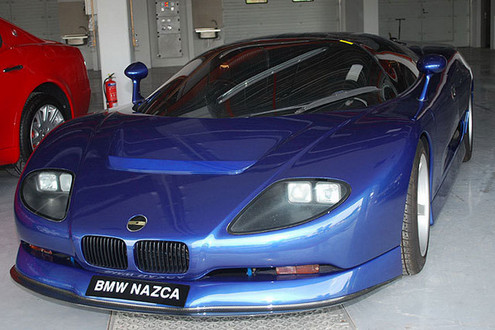
BMW Nazca

The BMW Nazca is a 1991 abstraction sports car. The car was advised by acclaimed automotive engineering aggregation Italdesign, home of Giorgetto Giugiaro, and appearance a agnate aboveboard architecture of a BMW. The car was able with the Neuromotion FC6 agent from BMW and produced 380 bhp (283 kW; 385 PS). The car had a top acceleration of 195 mph (314 km/h). Three cars in absolute were produced.

BMW 3-Series Coupe, 2011


 BMW 3-Series Coupe, 2011

BMW has announced substantial enhancements to the 2011 BMW 3-Series Coupe and Convertible, including outstanding style updates for 328i and 335i models and a new engine for 335i models. The 2011 BMW 3-Series Coupe and Convertible models will go on sale in Spring 2010, and pricing will be announced closer to the on-sale date.

Fundamentally unchanged are each car's essential attributes of rear-wheel drive (xDrive is available on the Coupe), near-perfect 50-50 weight distribution, remarkably precise steering, and skillfully engineered suspension…all of which conspire to produce the uniquely satisfying driving experience that is quintessentially BMW.

All-new is the engine for the 335i model. Internally designated the "N55," this turbocharged, all-aluminum engine features essentially the same "short block" and 3.0-liter displacement of its predecessor, but benefits from five additional years worth of development and refinement. The result is an engine that is more responsive, more fuel efficient, and cleaner-running than its outstanding predecessor, but preserves the previous engine's output and soul: 300 horsepower and 300 lb-ft of torque, and a 7,000 rpm redline. The 6-speed manual gearbox - beloved by North American enthusiast drivers - remains standard, and the well-known 6-speed Steptronic automatic is optional, now featuring "pull-style" shift paddles on the multifunction steering wheel.

Design. Reflecting the legendary distinction of BMW Coupes and Convertibles
The profile of the BMW 3-Series Coupe and Convertible is instantly recognizable at first glance. Beyond the basic shape of the car and its classic lines, the new design of the headlights, the enhanced depth and detail of the taillights, the interior, and even the exterior mirrors were specifically created for the Coupe and Convertible. These unique design elements reflect the sporty character of the car. The driver who chooses a two-door vehicle desires a car with dynamic looks as well as driving performance. With this in mind, BMW engineers and designers set out to create a unique, unmistakable blend of design features and most importantly, driving pleasure.

The new, long hood powerfully symbolizes BMW's loyalty to the inherently balanced inline-6 engine. The long wheelbase, short overhangs, the passenger compartment set aft and the low, sleek roofline which seamlessly slopes into the trunk are all characteristics of the BMW Coupe and BMW retractable hardtop Convertible.

To the classic proportions, three design lines—the shoulder, character and lower sill lines— enhance the sleek appearance. Both the shoulder line and character line stretch uninterrupted to the back of the car, allowing one's eye to move quickly and smoothly from front to rear along the entire length of the car. The sill line of the lower edge of the door flows into the front and rear air dams, reinforcing the dynamic nature of newest BMW 3-Series Coupe and Convertible.

The combination of lines flowing into one another elegantly emphasizes the vehicles' performance potential. While the shoulder line rises slightly but consistently from front to rear, the character line flows in a long, stretched arch all the way from the front fender to the new taillights. As the sill line, by contrast, moves up slightly to the rear in a slow and gentle curve, the distance between the character and sill lines becomes smaller near the rear wheel arches. The fender flare around each rear wheel also serves to give the character line extra tension in both an upward and outward direction.

Attractive new innovations at the front, side, and rear - integrated precisely into the overall look of the car- give greater emphasis to the sportiness of both models. At the same time, these modifications slightly extend the overhangs front and rear (now 1.14" and 0.12" longer, respectively), which adds a sleeker and even more athletic appearance.

The new, widened kidney grille, a signature feature of every BMW, suits the broad new hood and stands out from the surfaces around it. Interaction with the three-dimensional kidney frame creates a look of power and unique style. The frame around the kidney grille now features a chrome band precisely twisted within itself.

The BMW 3-Series Coupe and Convertible come standard in the U.S. with Xenon Adaptive Headlights, accented by BMW's signature corona light rings. At the top, the new headlights merge into a trim bar cutting off the light beam to create that concentrated, focused look typical of a genuine BMW. The corona rings, now powered by super-bright LED light sources, can serve as daytime running lights (if that feature is activated), and also as evening city lights, making the Coupe and Convertible instantly recognizable as a BMW, day or night. The upper edge of each headlight fixture is also illuminated by an LED light source.

The new design of the taillights is unique to the BMW 3-Series Coupe and Convertible. The rear light cluster feature two-piece L-shapes and are further accentuated by a new color scheme. With two rows of light tubes that illuminate simultaneously, they create a night design with depth and dimension. Integrated flush into the body of the car, the lights are split into two sections and extend up the trunk lid, blending with the character lines from the side profile. Horizontal LED tube taillights give the car an unmistakable look at night. The horizontal flowing lines accentuate the wide track and low stance of the Coupe and Convertible.

An additional horizontal contour line has been added to the rear air dam to further accentuate the width of the Coupe and Convertible. It creates light-and-shade effects to give the entire rear end a flatter and smoother appearance.

The exterior mirrors also receive a new design, adding further innovation to the unique looks of the BMW 3-Series Coupe and Convertible. They blend harmoniously into the side view and silhouette of each new model.

Interior: a truly stylish ambiance

The emphasis on individual style, dynamic performance and exclusivity continues within the interior. Here again, the focus is on the driving experience, as announced by the standard leather multifunction steering wheel. Horizontal lines dominate the surfaces on and around the instrument panel which blend with the lines of the center console door panels to give the interior a light but dynamic feel. In true BMW fashion, all operational and informational elements essential to driving are grouped on and around the steering wheel. Climate controls, as well as those for the audio and navigation systems, are within easy reach of the front passenger.

Because the Coupe and Convertible are four-passenger cars, the rear seat passengers are treated to a center console between their individual rear seats which includes individual storage boxes, additional air outlet vents, and footwell lights.

The BMW 3-Series Coupe and Convertible come standard with Dark Burl Walnut wood trim. As a choice, Bamboo Anthracite wood, Light Burl Walnut wood, and Aluminum trim are optional. Like the standard Dark Burl Walnut, these materials appear on the dash, front and rear consoles, doors and rear side panels.

The standard leatherette upholstery is available in Black and Creme Beige. For the optional leather upholstery, luxurious Dakota leather can be chosen. Here too, the buyer may choose Creme Beige, Oyster, Coral Red, Saddle Brown, Gray, or Black. Upholstery leather appears on the seat facings, door inserts and door handle surrounds; other leather-trimmed items include the gear shift boot, handbrake grip and steering wheel.

In other items of trim that don't change with upholstery or trim options, the interior door handles, gearshift surround trim, steering wheel spokes, instrument dial and engine Start/Stop button surrounds, dash air-outlet adjusting tabs and the optional iDrive controller are in pearl-gray galvanic material.

An elegant ambiance is further created in the interior by special lighting and switches with a premium look and feel. Ambiance lighting, streaming down from under the ledge on the door and side panels, and running from the A pillar all the way to the rear passenger area, creates a particularly warm, indirect lighting effect.

Through its design and configuration, the cabin emphasizes the sporting and driver-oriented character of the BMW 3-Series Coupe and Convertible. Taking a seat behind the steering wheel, the driver's eyes will immediately focus on the instrument cluster.

All-new turbocharged engine with Valvetronic for 335i

BMW 3-Series Coupe and Convertible customers have a choice of two inline-6 engines that are the worlds' finest. The 328i features 230 horsepower while the 335i has 300 horsepower and is the first inline-6 equipped with a single twin-scroll turbocharger, BMW's Valvetronic throttle-less intake technology, High Precision direct fuel injection, and all-aluminum construction.

The 335i's new inline-6 engine displaces 3.0-liters and develops maximum output of 300 hp at 5,800 rpm, with peak torque of 300 lb-ft available all the way from 1,200-5,000 rpm. Redline is 7,000 rpm. This is the same level of performance as the previous 3.0-liter twin-turbo inline-6 but with the innovation of twin-scroll technology and the integration of Valvetronic, this new engine is even more fuel efficient.

Historically, BMW engineers were never satisfied with the most often-cited downside to turbocharging: the frustrating "turbo lag" that occurs between the time at which driver presses the accelerator pedal and when the turbocharger develops sufficient rotation to increase power. Turbo lag is usually worse at low engine speeds. Other drawbacks included relatively high fuel consumption and poor emissions output. At the time, turbocharger technology was not a reliable, practical or efficient was to make power. For these and other reasons, BMW put turbocharged gasoline engines on the shelf for more than 20 years.

Two recent developments caused BMW to reconsider turbocharging. While many luxury-performance carmakers began to achieve power gains by building engines of ever-increasing displacement, BMW looked for a more efficient way; smaller engines and turbocharging made sense. Also, the technology transfer from BMW's turbocharged diesel engines could easily be transferred to their gasoline-fired counterparts. Accordingly, BMW articulated its new approach to developing high-performance engines as part of its EfficientDynamics initiative.

The new N55 is the first BMW inline-6 to combine turbocharging, High Precision direct fuel injection, and Valvetronic variable intake technology. It features a single, mid-sized turbocharger with a "twin-scroll" housing to boost performance and minimize the response lag. Thanks to its housing design which maintains proper separation between streams of exhaust gasses, the turbocharger builds up pressure much faster than previous-generation turbochargers, thus eliminating even the slightest tendency for lag.

A further advantage of turbocharging is that this is the most weight-efficient method to boost engine power and performance. The N55 turbocharged inline-6 weighs approximately 150 lbs. less than an equally powerful eight-cylinder engine displacing 4.0 liters. This lower weight means a significant advantage not only in fuel economy, but also in balancing the car's weight distribution.

Using Valvetronic for the first time on a turbocharged inline-6 allows the engine to "inhale" air for combustion with virtually no delay and with reduced pumping losses. As a result, the engine makes power more quickly than ever before, and this is proven by the N55's ability to reach peak torque at 1200rpm, 200rpm earlier than its predecessor.

As a result, the technology in the BMW 335i Coupe and Convertible represents a significant achievement in terms of both performance and fuel efficiency. The advantages over a conventional turbocharged engine are not only clearly measurable, but easy to feel on the road.

Turbocharging typically includes intercooling of the engine's induction air, that is, cooling the compressed air that emerges, very much heated up by the compression process, from the turbocharger(s). Sometimes it's done with coolant; in the case of the N55 engine, it's accomplished with outside air. Intercooling is necessary to reduce the temperature of the incoming air to preclude detonation or "knocking" that can reduce power or, in the extreme, damage the engine. Of course, the N55, like all other current BMW engines, is equipped with knock control as part of the Digital Motor Electronics (DME) engine management system. On the N55 engine, the DME is now mounted directly to the top of the engine for better packaging and weight savings.

The significant loads and cylinder pressures of the N55 300-hp engine required the use of an aluminum engine structure with cast-iron cylinder sleeves. Altogether, the N55 weighs about 427 lbs. The 335i Coupe and Convertible dual exhaust system runs at both sides of the vehicle. At low loads, a flap channels most gas through one side to reduce low-frequency exhaust "rumble." The 335i Coupe and Convertible feature an air-to-oil external oil cooler mounted in one wheel well as opposed to the N52's coolant-to-oil unit.

The peak power of 300 hp at 5800rpm has already been mentioned; this is fully 70 hp up on the 2011 328i models. At least as important is the fact that this engine can deliver its peak torque from 1200 rpm - not far above idling - to 5000 rpm. On the road, this power and torque result in outstanding performance. The 335i Coupe and Convertible can accelerate from 0 - 60 mph in just 5.3 (5.5) seconds and 5.5 (5.7) seconds, respectively, when equipped with the manual (automatic) transmission. The sense of urgency continues all the way to the electronically limited top speed of 130 mph (150 mph when equipped with the optional Sport Package). The 335i xDrive coupe accelerates 0-60 mph in 5.2 (5.3) seconds when equipped with the manual (automatic) transmission.

Finally, the new N55 engine is able to achieve a more favorable emissions signature than its predecessor. The single turbocharger has only one exhaust path and feeds a single catalytic converter in place of the previous engine's two. This means the exhaust gases are concentrated at the catalytic converter for better cold-start emissions performance, making the N55 a more environmentally friendly engine.

The 328i Convertible is powered by BMW's 230 horsepower, 200 lb-ft, 3.0-liter inline-6 engine, known internally as the N52. Its magnesium/aluminum construction and Valvetronic variable valve lift are features found only on BMW engines. The N52 achieves impressive progress on all performance and technology fronts, especially in its remarkably light weight of 357 lbs. An aluminum/magnesium engine block, hollow camshafts, plastic camshaft cover, improved combustion chambers, a further evolved Double VANOS[1], higher fuel injection pressure, sophisticated engine electronics, an electric coolant pump, a variable-volume oil pump and an oil/coolant heat exchanger are the other weight-saving features and improvements of this engine over previous generations.

For the Coupes: Available xDrive intelligent all-wheel drive.

The 2011 BMW 335i xDrive Coupe combines intelligent all-wheel drive with the power of BMW's new 300-horsepower, turbocharged 3.0-liter inline-6 engine. Likewise, the 2011 BMW 328i xDrive Coupe will impress with its 230-hp, 3.0-liter inline-6 engine featuring magnesium-aluminum construction. On smooth, dry roads BMW's xDrive gives a sporty, rear-wheel drive feel. But on a wet or snow-covered road, xDrive automatically sends more torque to the axle with more traction. BMW's xDrive is the most sophisticated and responsive all-wheel drive system on the market today. It has proven its merits, in terms of agility and safety, in the 19 BMW models currently offered with xDrive in the U.S.

For the Convertibles: Sun-Reflective Leather offers cooler seats
BMW is the first carmaker in the world to use sun-reflective technology to mitigate temperatures on leather seating, armrest surfaces, headrests, and gear shifter. The process uses modified color pigments imbedded in the leather during the production process to reflect the infrared radiation of the sun in wavelengths of more than 720 nanometers.

This leather treatment is able to reduce surface temperatures on dark interior colors by up to 20 Celsius degrees (36 Fahrenheit degrees), and also offers advantages on light-colored upholstery, where the heating effect of sunshine is less severe, reducing the surface temperature by as much as 15 Celsius degrees (27 Fahrenheit degrees). All other qualities of the leather remained unchanged.

BMW 3-Series Convertible, 2011


 BMW 3-Series Convertible, 2011

BMW has announced substantial enhancements to the 2011 BMW 3-Series Convertible and Coupe, including outstanding style updates for 328i and 335i models and a new engine for 335i models. The 2011 BMW 3-Series Convertible and Coupe models will go on sale in Spring 2010, and pricing will be announced closer to the on-sale date.

Fundamentally unchanged are each car's essential attributes of rear-wheel drive (xDrive is available on the Coupe), near-perfect 50-50 weight distribution, remarkably precise steering, and skillfully engineered suspension…all of which conspire to produce the uniquely satisfying driving experience that is quintessentially BMW.

All-new is the engine for the 335i model. Internally designated the "N55," this turbocharged, all-aluminum engine features essentially the same "short block" and 3.0-liter displacement of its predecessor, but benefits from five additional years worth of development and refinement. The result is an engine that is more responsive, more fuel efficient, and cleaner-running than its outstanding predecessor, but preserves the previous engine's output and soul: 300 horsepower and 300 lb-ft of torque, and a 7,000 rpm redline. The 6-speed manual gearbox - beloved by North American enthusiast drivers - remains standard, and the well-known 6-speed Steptronic automatic is optional, now featuring "pull-style" shift paddles on the multifunction steering wheel.

Design. Reflecting the legendary distinction of BMW Coupes and Convertibles

The profile of the BMW 3-Series Convertible and Coupe is instantly recognizable at first glance. Beyond the basic shape of the car and its classic lines, the new design of the headlights, the enhanced depth and detail of the taillights, the interior, and even the exterior mirrors were specifically created for the Convertible and Coupe. These unique design elements reflect the sporty character of the car. The driver who chooses a two-door vehicle desires a car with dynamic looks as well as driving performance. With this in mind, BMW engineers and designers set out to create a unique, unmistakable blend of design features and most importantly, driving pleasure.

It all begins with proportions. The new, long hood powerfully symbolizes BMW's loyalty to the inherently balanced inline-6 engine. The long wheelbase, short overhangs, the passenger compartment set aft and the low, sleek roofline which seamlessly slopes into the trunk are all characteristics of the BMW Coupe and BMW retractable hardtop Convertible.

In addition to the classic proportions, three design lines—the shoulder, character and lower sill lines— enhance the sleek appearance. Both the shoulder line and character line stretch uninterrupted to the back of the car, allowing one's eye to move quickly and smoothly from front to rear along the entire length of the car. The sill line of the lower edge of the door flows into the front and rear air dams, reinforcing the dynamic nature of newest BMW 3-Series Convertible and Coupe.

The combination of lines flowing into one another elegantly emphasizes the vehicles' performance potential. While the shoulder line rises slightly but consistently from front to rear, the character line flows in a long, stretched arch all the way from the front fender to the new taillights. As the sill line, by contrast, moves up slightly to the rear in a slow and gentle curve, the distance between the character and sill lines becomes smaller near the rear wheel arches. The fender flare around each rear wheel also serves to give the character line extra tension in both an upward and outward direction.

Attractive new innovations at the front, side, and rear - integrated precisely into the overall look of the car- give greater emphasis to the sportiness of both models. At the same time, these modifications slightly extend the overhangs front and rear (now 1.14" and 0.12" longer, respectively), which adds a sleeker and even more athletic appearance.

The new, widened kidney grille, a signature feature of every BMW, suits the broad new hood and stands out from the surfaces around it. Interaction with the three-dimensional kidney frame creates a look of power and unique style. The frame around the kidney grille now features a chrome band precisely twisted within itself.

The BMW 3-Series Convertible and Coupe come standard in the U.S. with Xenon Adaptive Headlights, accented by BMW's signature corona light rings. At the top, the new headlights merge into a trim bar cutting off the light beam to create that concentrated, focused look typical of a genuine BMW. The corona rings, now powered by super-bright LED light sources, can serve as daytime running lights (if that feature is activated), and also as evening city lights, making the Convertible and Coupe instantly recognizable as a BMW, day or night. The upper edge of each headlight fixture is also illuminated by an LED light source.

The new design of the taillights is unique to the BMW 3-Series Convertible and Coupe. The rear light cluster feature two-piece L-shapes and are further accentuated by a new color scheme. With two rows of light tubes that illuminate simultaneously, they create a night design with depth and dimension. Integrated flush into the body of the car, the lights are split into two sections and extend up the trunk lid, blending with the character lines from the side profile. Horizontal LED tube taillights give the car an unmistakable look at night. The horizontal flowing lines accentuate the wide track and low stance of the Convertible and Coupe.

An additional horizontal contour line has been added to the rear air dam to further accentuate the width of the Convertible and Coupe. It creates light-and-shade effects to give the entire rear end a flatter and smoother appearance.
The exterior mirrors also receive a new design, adding further innovation to the unique looks of the BMW 3-Series Convertible and Coupe. They blend harmoniously into the side view and silhouette of each new model.

Deep Sea Blue Metallic, Vermillion Red Metallic, and Mineral White Metallic exterior colors will each become available for the new BMW 3-Series Convertible and Coupe this spring.

Interior: a truly stylish ambiance

The emphasis on individual style, dynamic performance and exclusivity continues within the interior. Here again, the focus is on the driving experience, as announced by the standard leather multifunction steering wheel. Horizontal lines dominate the surfaces on and around the instrument panel which blend with the lines of the center console door panels to give the interior a light but dynamic feel. In true BMW fashion, all operational and informational elements essential to driving are grouped on and around the steering wheel. Climate controls, as well as those for the audio and navigation systems, are within easy reach of the front passenger.

The BMW 3-Series Convertible and Coupe come standard with Dark Burl Walnut wood trim. As a choice, Bamboo Anthracite wood, Light Burl Walnut wood, and Aluminum trim are optional. Like the standard Dark Burl Walnut, these materials appear on the dash, front and rear consoles, doors and rear side panels.

The standard leatherette upholstery is available in Black and Creme Beige. For the optional leather upholstery, luxurious Dakota leather can be chosen. Here too, the buyer may choose Creme Beige, Oyster, Coral Red, Saddle Brown, Gray, or Black. Upholstery leather appears on the seat facings, door inserts and door handle surrounds; other leather-trimmed items include the gear shift boot, handbrake grip and steering wheel.

In other items of trim that don't change with upholstery or trim options, the interior door handles, gearshift surround trim, steering wheel spokes, instrument dial and engine Start/Stop button surrounds, dash air-outlet adjusting tabs and the optional iDrive controller are in pearl-gray galvanic material.

An elegant ambiance is further created in the interior by special lighting and switches with a premium look and feel. Ambiance lighting, streaming down from under the ledge on the door and side panels, and running from the A pillar all the way to the rear passenger area, creates a particularly warm, indirect lighting effect.

Through its design and configuration, the cabin emphasizes the sporting and driver-oriented character of the BMW 3-Series Convertible and Coupe. Taking a seat behind the steering wheel, the driver's eyes will immediately focus on the instrument cluster.

All-new turbocharged engine with Valvetronic for 335i

BMW 3-Series Convertible and Coupe customers have a choice of two inline-6 engines that are the worlds' finest. The 328i features 230 horsepower while the 335i has 300 horsepower and is the first inline-6 equipped with a single twin-scroll turbocharger, BMW's Valvetronic throttle-less intake technology, High Precision direct fuel injection, and all-aluminum construction.

The 335i's new inline-6 engine displaces 3.0-liters and develops maximum output of 300 hp at 5,800 rpm, with peak torque of 300 lb-ft available all the way from 1,200-5,000 rpm. Redline is 7,000 rpm. This is the same level of performance as the previous 3.0-liter twin-turbo inline-6 but with the innovation of twin-scroll technology and the integration of Valvetronic, this new engine is even more fuel efficient.

Historically, BMW engineers were never satisfied with the most often-cited downside to turbocharging: the frustrating "turbo lag" that occurs between the time at which driver presses the accelerator pedal and when the turbocharger develops sufficient rotation to increase power. Turbo lag is usually worse at low engine speeds. Other drawbacks included relatively high fuel consumption and poor emissions output. At the time, turbocharger technology was not a reliable, practical or efficient was to make power. For these and other reasons, BMW put turbocharged gasoline engines on the shelf for more than 20 years.

Two recent developments caused BMW to reconsider turbocharging. While many luxury-performance carmakers began to achieve power gains by building engines of ever-increasing displacement, BMW looked for a more efficient way; smaller engines and turbocharging made sense. Also, the technology transfer from BMW's turbocharged diesel engines could easily be transferred to their gasoline-fired counterparts. Accordingly, BMW articulated its new approach to developing high-performance engines as part of its EfficientDynamics initiative.

The new N55 is the first BMW inline-6 to combine turbocharging, High Precision direct fuel injection, and Valvetronic variable intake technology. It features a single, mid-sized turbocharger with a "twin-scroll" housing to boost performance and minimize the response lag. Thanks to its housing design which maintains proper separation between streams of exhaust gasses, the turbocharger builds up pressure much faster than previous-generation turbochargers, thus eliminating even the slightest tendency for lag.

A further advantage of turbocharging is that this is the most weight-efficient method to boost engine power and performance. The N55 turbocharged inline-6 weighs approximately 150 lbs. less than an equally powerful eight-cylinder engine displacing 4.0 liters. This lower weight means a significant advantage not only in fuel economy, but also in balancing the car's weight distribution.

Using Valvetronic for the first time on a turbocharged inline-6 allows the engine to "inhale" air for combustion with virtually no delay and with reduced pumping losses. As a result, the engine makes power more quickly than ever before, and this is proven by the N55's ability to reach peak torque at 1200rpm, 200rpm earlier than its predecessor.

As a result, the technology in the BMW 335i Convertible and Coupe represents a significant achievement in terms of both performance and fuel efficiency. The advantages over a conventional turbocharged engine are not only clearly measurable, but easy to feel on the road.

Turbocharging typically includes intercooling of the engine's induction air, that is, cooling the compressed air that emerges, very much heated up by the compression process, from the turbocharger(s). Sometimes it's done with coolant; in the case of the N55 engine, it's accomplished with outside air. Intercooling is necessary to reduce the temperature of the incoming air to preclude detonation or "knocking" that can reduce power or, in the extreme, damage the engine. Of course, the N55, like all other current BMW engines, is equipped with knock control as part of the Digital Motor Electronics (DME) engine management system. On the N55 engine, the DME is now mounted directly to the top of the engine for better packaging and weight savings.

The significant loads and cylinder pressures of the N55 300-hp engine required the use of an aluminum engine structure with cast-iron cylinder sleeves. Altogether, the N55 weighs about 427 lbs. The 335i Convertible and Coupe dual exhaust system runs at both sides of the vehicle. At low loads, a flap channels most gas through one side to reduce low-frequency exhaust "rumble." The 335i Convertible and Coupe feature an air-to-oil external oil cooler mounted in one wheel well as opposed to the N52's coolant-to-oil unit.

The peak power of 300 hp at 5800rpm has already been mentioned; this is fully 70 hp up on the 2011 328i models. At least as important is the fact that this engine can deliver its peak torque from 1200 rpm - not far above idling - to 5000 rpm. On the road, this power and torque result in outstanding performance. The 335i Convertible and Coupe can accelerate from 0 - 60 mph in just 5.3 (5.5) seconds and 5.5 (5.7) seconds, respectively, when equipped with the manual (automatic) transmission. The sense of urgency continues all the way to the electronically limited top speed of 130 mph (150 mph when equipped with the optional Sport Package). The 335i xDrive coupe accelerates 0-60 mph in 5.2 (5.3) seconds when equipped with the manual (automatic) transmission.

The new N55 engine is able to achieve a more favorable emissions signature than its predecessor. The single turbocharger has only one exhaust path and feeds a single catalytic converter in place of the previous engine's two. This means the exhaust gases are concentrated at the catalytic converter for better cold-start emissions performance, making the N55 a more environmentally friendly engine.

The 328i Convertible is powered by BMW's 230 horsepower, 200 lb-ft, 3.0-liter inline-6 engine, known internally as the N52. Its magnesium/aluminum construction and Valvetronic variable valve lift are features found only on BMW engines. The N52 achieves impressive progress on all performance and technology fronts, especially in its remarkably light weight of 357 lbs. An aluminum/magnesium engine block, hollow camshafts, plastic camshaft cover, improved combustion chambers, a further evolved Double VANOS[1], higher fuel injection pressure, sophisticated engine electronics, an electric coolant pump, a variable-volume oil pump and an oil/coolant heat exchanger are the other weight-saving features and improvements of this engine over previous generations.

For the Coupes: Available xDrive intelligent all-wheel drive.

The 2011 BMW 335i xDrive Coupe combines intelligent all-wheel drive with the power of BMW's new 300-horsepower, turbocharged 3.0-liter inline-6 engine. Likewise, the 2011 BMW 328i xDrive Coupe will impress with its 230-hp, 3.0-liter inline-6 engine featuring magnesium-aluminum construction. On smooth, dry roads BMW's xDrive gives a sporty, rear-wheel drive feel. But on a wet or snow-covered road, xDrive automatically sends more torque to the axle with more traction. BMW's xDrive is the most sophisticated and responsive all-wheel drive system on the market today. It has proven its merits, in terms of agility and safety, in the 19 BMW models currently offered with xDrive in the U.S.

For the Convertibles: Sun-Reflective Leather offers cooler seats

BMW is the first carmaker in the world to use sun-reflective technology to mitigate temperatures on leather seating, armrest surfaces, headrests, and gear shifter. The process uses modified color pigments imbedded in the leather during the production process to reflect the infrared radiation of the sun in wavelengths of more than 720 nanometers.

The leather treatment is able to reduce surface temperatures on dark interior colors by up to 20 Celsius degrees (36 Fahrenheit degrees), and also offers advantages on light-colored upholstery, where the heating effect of sunshine is less severe, reducing the surface temperature by as much as 15 Celsius degrees (27 Fahrenheit degrees). All other qualities of the leather remained unchanged.

2012 BMW M5 Video Teaser Released

The M from BMW is about to have a whole new definition quickly. 2012 BMW M5 Video Teaser Released  As when the one Sequence M coupe was only a warm-up for the true thing, the M5, the greater, meaner, much more effective version of the 5 Sequence, is expected to hit the streets, dealerships and new amounts of overall performance someday this year. 
2012 BMW M5 Video Teaser


To become uncovered, according to BMWblog, in between June 23 and 26 in the German automaker's M Festival, the M5 exposed a bit more of by itself on Tuesday, in a video clip exhibiting the model undertaking some very quick runs on the Nardo Ring from the south of Italy.

Of course, that is not the first, and can most likely not be the very last of the M5 teasers we see. Because it prepared the launch from the one Sequence M, BMW has made a habit of building about pleasure over its designs way forward of their start; 'cause word may be the public will not get the possibility to knowledge the M5 whenever faster than the Frankfurt Auto Show later this fall.

For what it really is well worth, the M5 is amongst the finest kept secrets inside the BMW garages, with small actual specifics being launched a single way or an additional. Rumor may be the product will use the same motor fitted on the M variations of BMWs SUVs, with all of the necessary tweaks for that 2012 product year.

Figures may well exhibit a troop comprising 570 horsepower and 530 lb-ft of torque, sufficient to pull the vehicle previous the 62 mph threshold in 4.four seconds. Watch the video beneath to get an concept of how that feels.

BMW M3 GTS - 2011

2011 BMW M3 GTS

Hamann from Laupheim, Germany, has already begun with modifications for the youngest 3-Series Convertible. An aerodynamic kit, power boost, new wheels, suspension components, as well as stylish interior enhance the sporty elegant features and improves driving performance of this Bavarian beauty.
auto part and assesories

Power Boost for Gas Engines and Diesels


Hamann boosts the power in this Convertible by means of optimized curved maps. Meaning, the electronic power boost is achieved by recalibrating the standard ECU. The four-cylinder model 320i receives Hamanns boost of 10 bhp and 7 lb-ft of torque, enough for a 3 mph higher top speed. The six-cylinder gas engines 325i and 330i experience a plus of 13 bhp and 17 bhp and both about 18 lb-ft of torque as well. Top speed climbs to 155 mph, respectively 165 mph. Included in price for the 330i is deactivation of 155 mph speed restriction. Likewise the 335i receives a power boost of 37 bhp and an impressive 174 mph top speed. For easier breathing capabilities of the 6-cylinder model Hamann offers a sport air filter.


For the current diesel model 330d customers can expect a significant power boost to 272 bhp, making possible a top speed of 157 mph (standard: 150 mph) and 443 lb-ft of torque at 2000 rpm/min.


By fitting a Hamann 4-pipe sports rear muffler with four round tailpipes, the 335i publicizes its power. The four stainless steel tailpipes, each 76mm in diameter, make the rear end of this Convertible even more attractive.


Powerful Sport Aerodynamics


BMW tailored beautiful body-work for the 3-series Convertible. Hamann provides customers a even more individual look with specially powerful enhancement.


Fitted to the standard bumper is a new, distinctive sportier looking Hamann designed front spoiler. The visual lowering effect created by the new side sills, lend the side view more character. The buoyancy reducing rear spoiler in combination with the new Hamann rear center molding designed for conjunction with the Hamann 4-pipe sport muffler, incorporates matching cutouts for the tailpipes and is a real eye-catcher.


Fitted black Carbon-Kevlar mirror caps lends the Hamann 3-Series Convertible that final polished look.


Wheels from 18 to 20-inches


Hamann really goes to town when it comes to wheels. Three unique individual designs and three sizes from 18 to 20 inch make selection difficult. A multispoke design is featured in the single-piece rim Anniversary I is available in silver finish and features an outer rim with an INOX steel lip. Hamann offers it in 18, 19 and 20 inch versions. The wheel PG3 is a multiple five-spoke composite wheel in silver with a high-gloss polished rim flange. Here customers can choose between sizes 19 and 20 inches.


Unquestionably, 20 inch wheels suit the customized 3-Series Convertible best. Hamann offers this size as top model design Edition Race. The appearance of this three piece, ultra-lightweight, forged rim is a cross-spoke design with a black spider characterized by the 9 main spokes, each of which branches outwards into 2 further spokes. Following this exciting design, the titanium bolts are a particularly attention-getting design. The high-gloss rim flange adds the finishing touch to this stylish look.


Typical wheel / tire combination in 20 inch:
Edition Race: front 8,5 J x 20 / rear 10,0 J x 20 - 235/30 ZR20 / 285/25 ZR20
PG3: front and rear 8,5 J x 20 - 235/30 ZR20
Anniversary I: front and rear 9,0 J x 20 235/30 ZR20


Choice of combination with wider rear axle tires is possible for all 19 and 20 inch versions from Anniversary I and PG3 as in the case of Edition Race wheels as well. Hamann provides advice as requested regarding all possible combinations.


Better Handling and Powerful Gripping Brakes


By fitting a suspension lowering kit comprising of four progressive suspension struts, Hamann succeeds in lowering the vehicles center of gravity by 1.4 inch front and by 0.8 inch rear. For vehicles with sport suspension tuning systems from stock, that's still around 0.0 inch. In both cases, a clearly better handling results. Among race drives it is said races are won on the brakes. For those who prefer to use somewhat more rapid acceleration, Hamann program suggests powerful gripping brakes for security purposes.


Interior designed with numerable accessories creates an even more pleasurable stay in Hamanns 3-Series Cabrio. Thanks to the three-spoke Hamann airbag sports steering wheel, the drivers hands always hold the reins securely. A sporty flair is added by the decorative carbon-fiber components, which Hamann fits to the dashboard, center console, ashtray trim, doors, steering wheel, gearshift knob, handbrake lever and the I-Drive-Controller. Hamann adds further sporty nuances in the form of sport gearshift knobs (in aluminum or leather/aluminum), aluminum pedals, an aluminum handbrake lever and an aluminum footrest. An exclusive set of floor mats sporting the Hamann logo in silver rounds off the interior offerings.


Of course, Hamann customizes every 3-Series to individual customer requests. For example, luxurious leather upholsteries in a variety of colors are possible, as are extensive multimedia conversions featuring DVD player, TV or Playstation.


BMW Z4 - 2011

 2011 BMW Z4 car pictures: